Our tools · and the Lundy model
Four moons. Between them, all four parts of Lundy.
Each moon is a tool your team already taps. Underneath each one is the part of the Lundy model it puts on the record.
Tap each moon.
Three things your team taps. One place it all lands.
Log your time
Puts on the record — Space
Lundy asks for a safe, inclusive chance to form a view. Making that space is hours — and it is the only part of the model with a cost behind it.
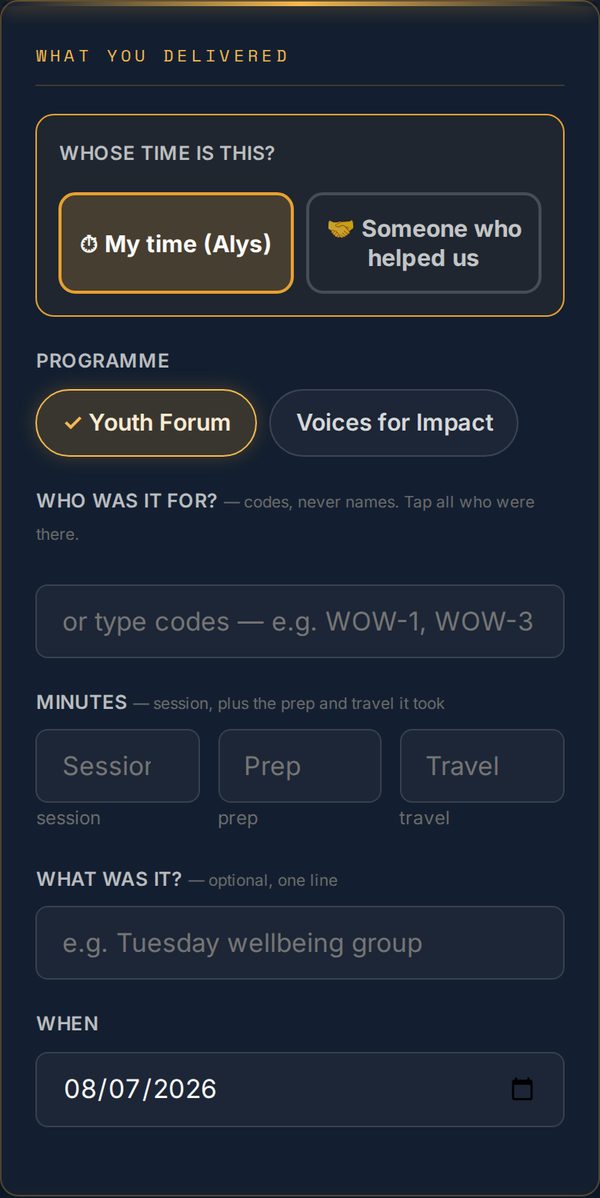
What your worker taps
Who taps itAnyone who delivered — paid staff or volunteer. Two minutes at the end of a session: the session, the prep, the travel.
What comes outThe same hours, read three ways. Social value for hours given beyond what the grant paid for. In-kind for donated time. Cost of delivery for funded hours, at what they actually cost.
Why that mattersThose three are never added together. Adding cost to a return counts your funder’s money twice, and that is the first thing an evaluator checks.
Distance travelled
Puts on the record — Voice
Lundy asks that young people are helped to form a view and say it. So measure what that did to them, not only what they answered.
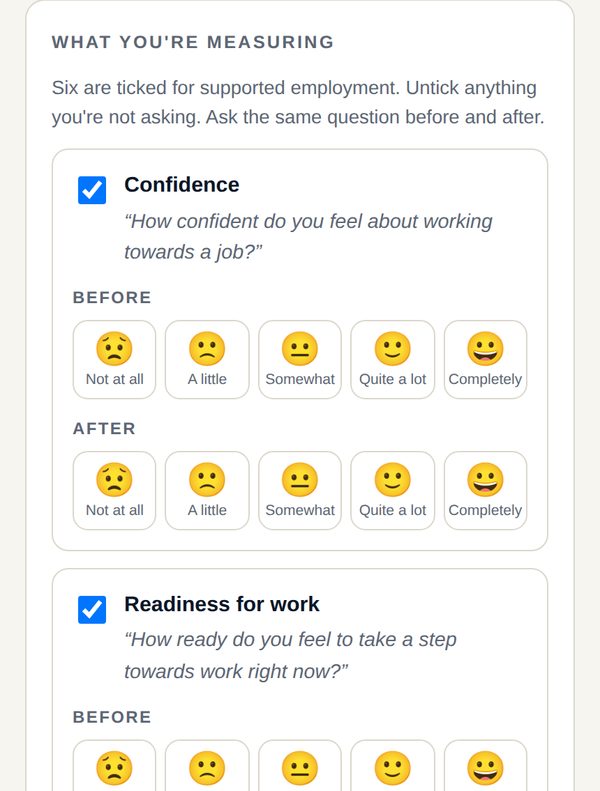
Before and after, five faces
Who taps itThe young person. Faces, not numbers. Once before, once after, against an anonymous code — never a name.
What comes outThe shift per measure across a group. Speaking up, confidence, belonging — in your own questions, in your own words.
Why that mattersTaking part is itself the intervention. A young person who could not speak in a room in March and can in November is an outcome, not a side effect.
Log an outcome
Puts on the record — Audience and Influence
Lundy asks that the view reaches someone with power, gets acted on, and that young people are told what happened. All three are dated events, not questions on a form — so one tool carries the two parts that usually go unrecorded.
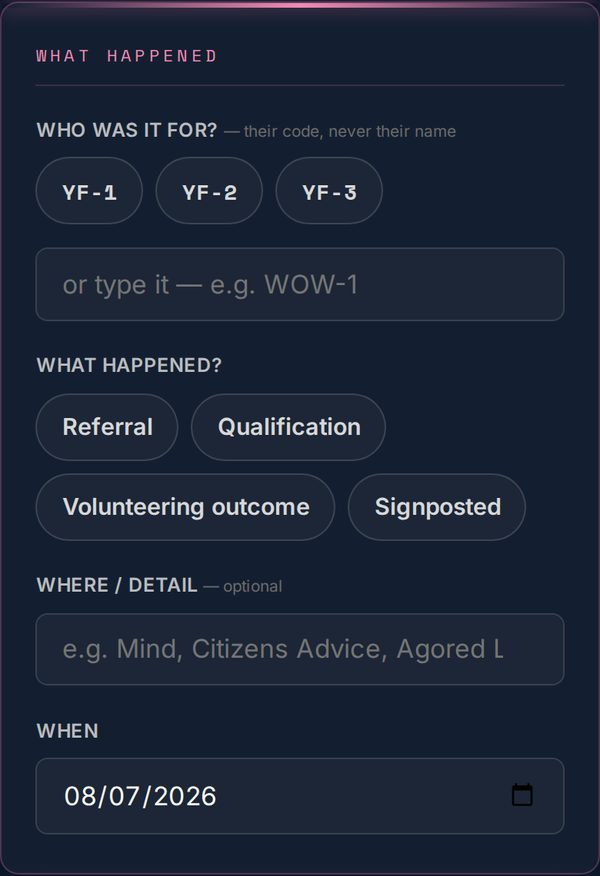
Ten seconds, from the room
Who taps itWhoever was there. The code, what happened, where, the date. On a phone on the way out.
What comes outAn evidence trail. “14 October, to the Cabinet Member for Transport, at scrutiny.” Then the follow-up: what changed, and whether the young people were told.
Why that mattersA no that gets explained is a proper Lundy outcome. Silence is not. Same code, same young people, start to finish.
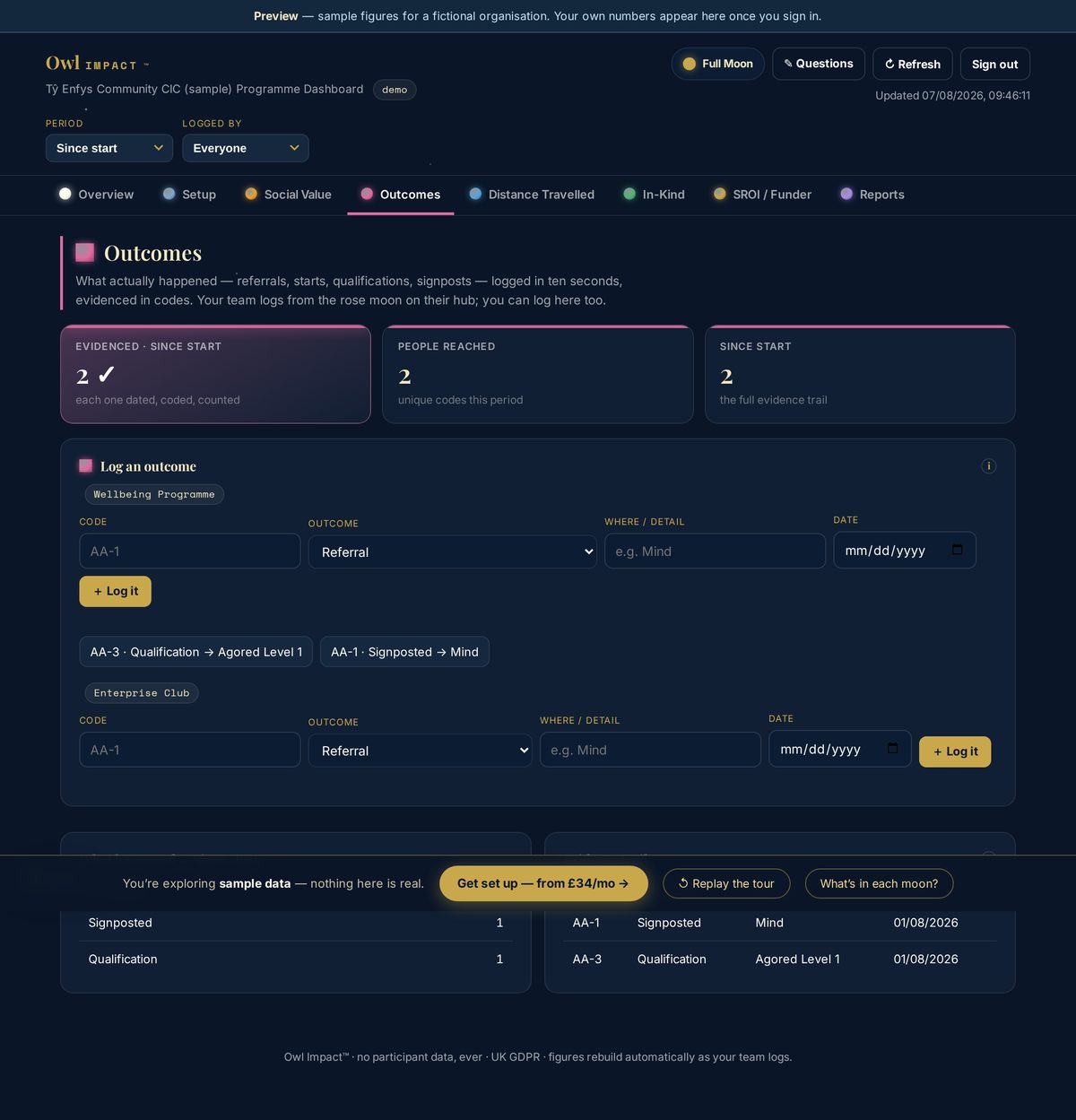
Sample data — every outcome dated, coded and counted
My dashboard
Puts on the record — all four, in one place
Every log from every worker arrives here. Each tool is a moon, each figure in its colour. Nobody types a total, and nobody chases a spreadsheet.
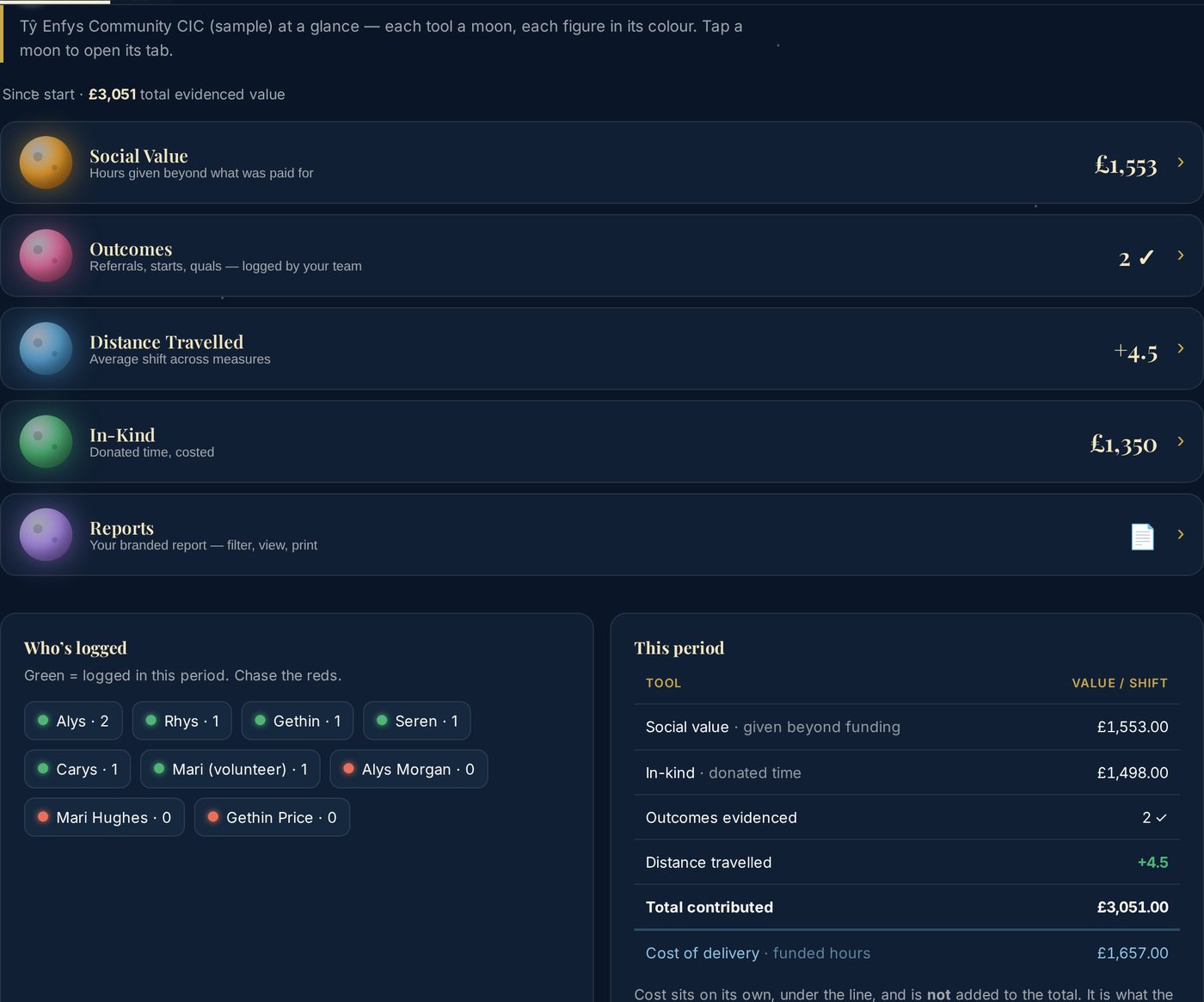
Sample data for a fictional organisation
Open the sample dashboard →
Choose “Preview with sample data”. No account, nothing real, nothing saved.
So can one moon rule them all? It already does — the full one.
The logging tools are its phases. Every tap is a sliver of the same picture, and the dashboard is the whole moon.
Voice on its own is not enough. That was Lundy’s point too.
Voice on its own is not enough. That was Lundy’s point too.